rules
Japan Traffic Rules Explained
Speed limits, alcohol rules, child seats and penalties.
holioo.com Japan Drive Editorial TeamLast updated:2026.09.01Information checked:2026.09
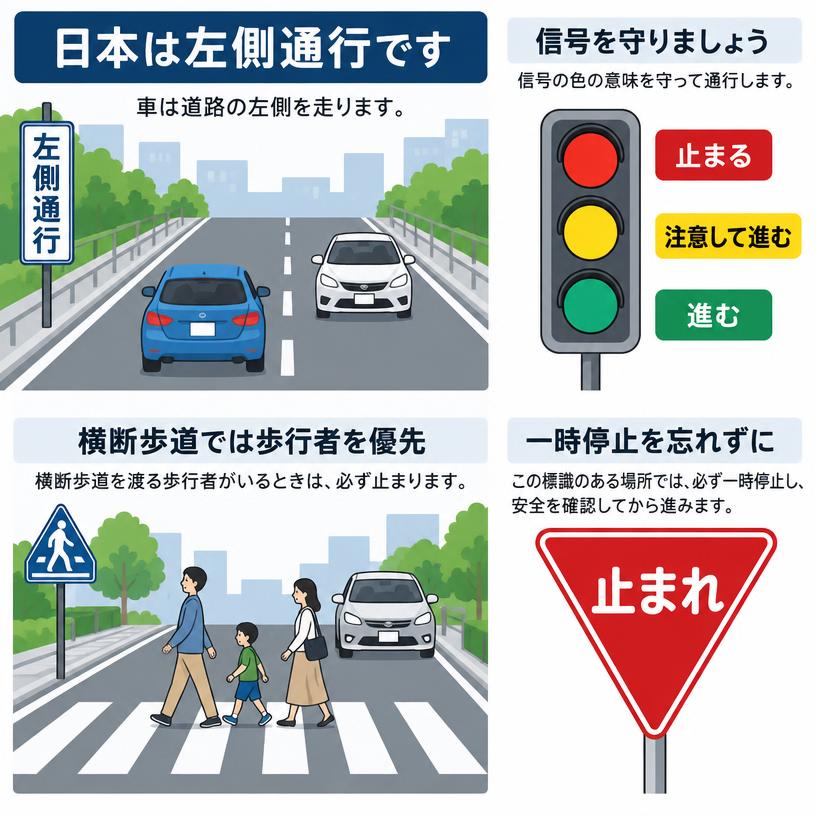
Drive on the left and follow posted limits
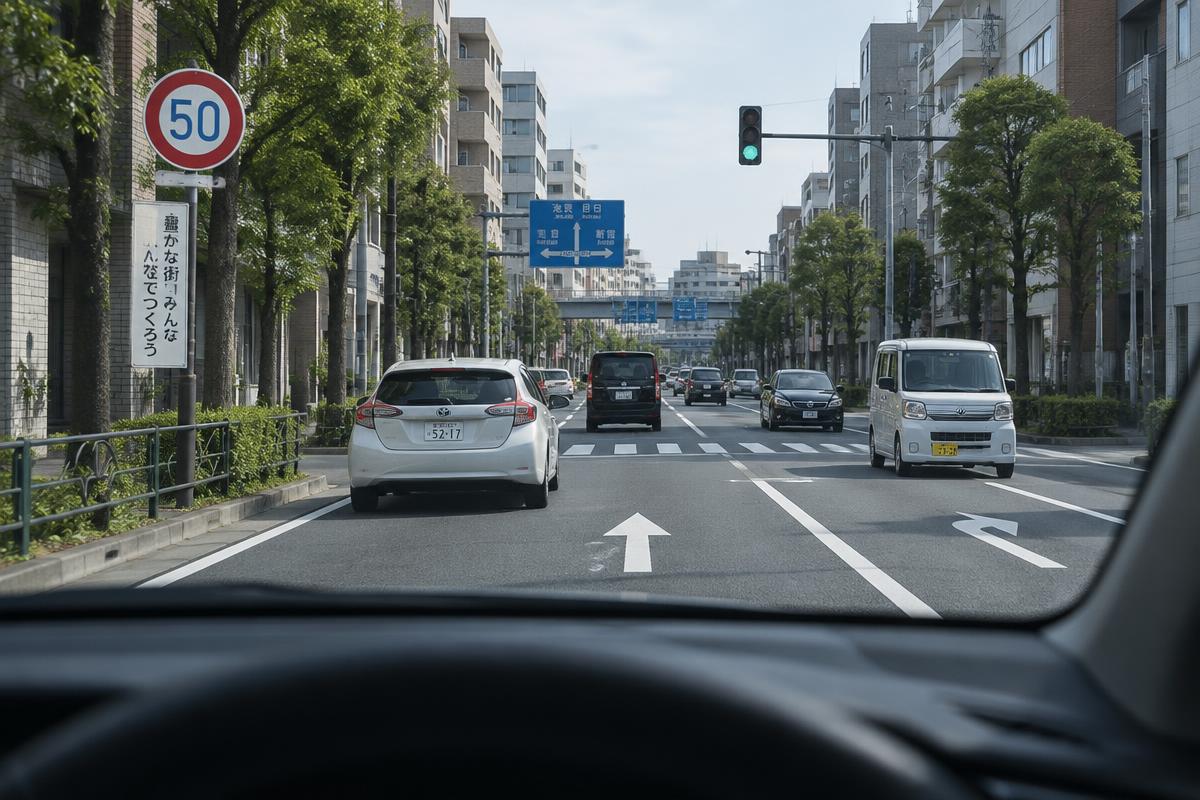
- Ordinary roads: 40–60 km/h as posted
- Expressways: 80–100 km/h, some sections 120 km/h
- Residential and school zones: 30 km/h
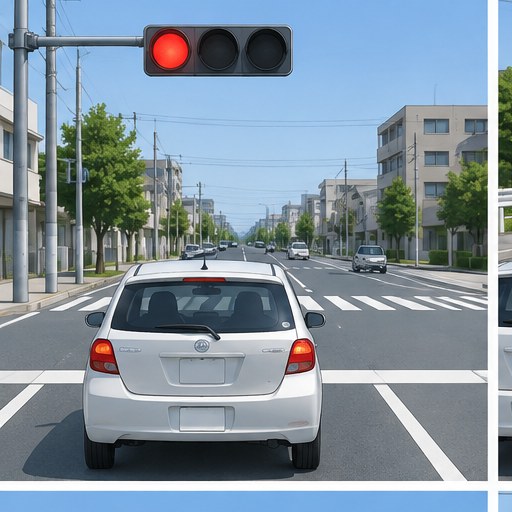
Stop completely at a red light
At a red light you may not proceed straight or turn left unless a separate green arrow permits it. Stop fully before the line even when the junction appears empty.
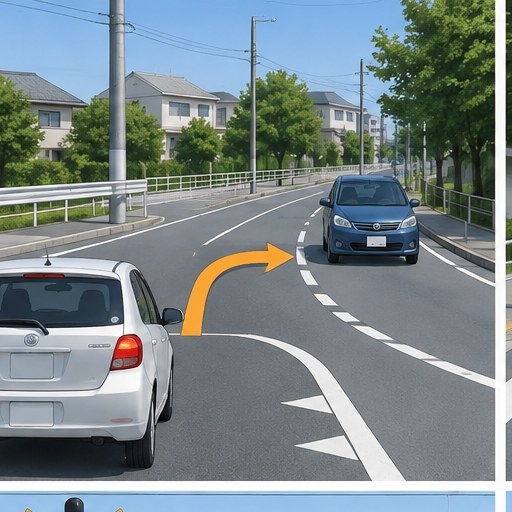
Yield to oncoming traffic when turning right
A right turn crosses oncoming lanes. Yield to straight and left-turning traffic, then check pedestrians and bicycles before completing the turn.
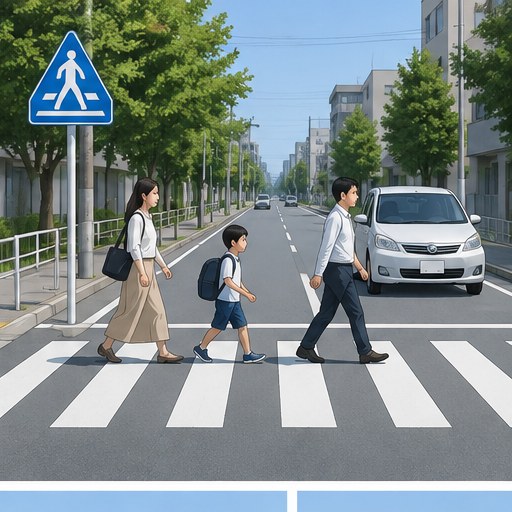
Pedestrians have priority at crossings
Slow when approaching an uncontrolled crossing. If someone is crossing or clearly intends to cross, stop before the line and give way.
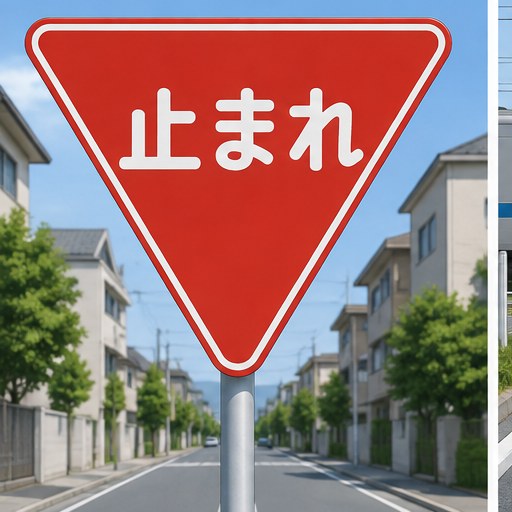
STOP / 止まれ requires a full stop
The red triangular 止まれ sign and road marking both mean stop. The wheels must become fully stationary before the line, then check both directions.
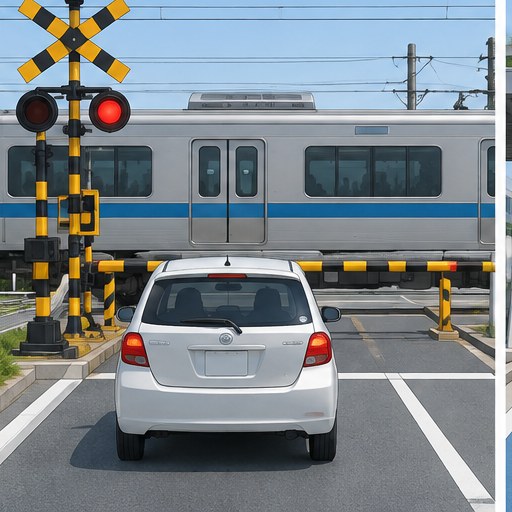
Stop and check at railway crossings
Stop before every level crossing even when alarms are silent and barriers are raised. Check both ways, and never enter unless there is room to clear it.
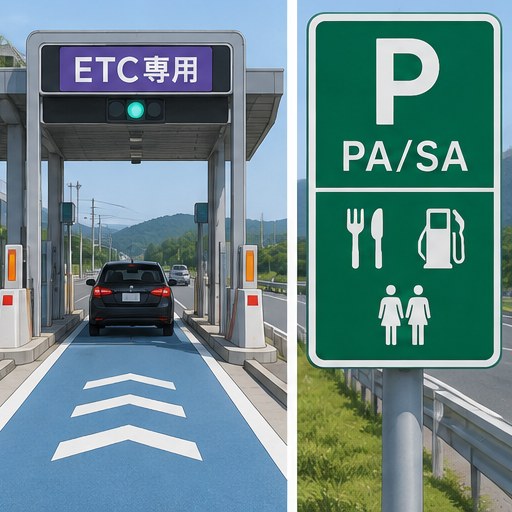
Expressways, ETC and PA/SA
Choose an ETC or general lane as signed, slow at the gate and keep space. PA denotes a smaller parking area; SA usually adds food, toilets and fuel. Rest before fatigue sets in.
Other essential rules and signs
Japan strictly prohibits drink-driving and handheld phone use. Everyone must wear a seat belt and children under six need a child seat. Report every accident to police on 110 and the rental company.
Reference sources
Useful? Share it with your Japan road trip companions.
holioo.com | Japan Traffic Rules Explained https://e-drive.holioo.com/en/guides/japan-traffic-rules
More in this topic
About this page
We keep updating this collection of driving, rental, road, parking and itinerary information for Japan. When rules, facilities or spot details change, we revise the page.
Rules and fees can change. Always confirm the latest official information before you travel.
Read next
Parking in Japan