emergency
Driving During Earthquakes, Tsunami and Typhoons
How to react behind the wheel when an earthquake, tsunami warning or typhoon hits.
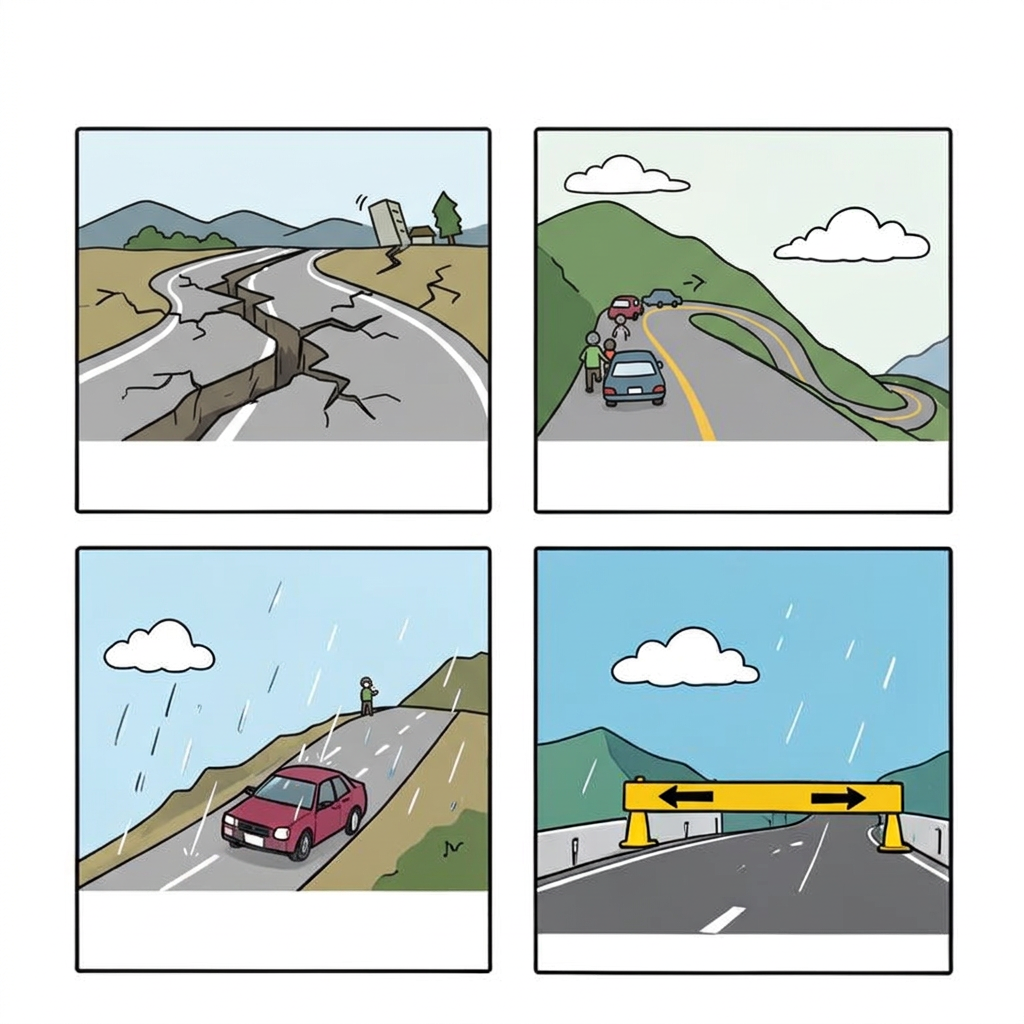
holioo.com Japan Drive Editorial TeamLast updated:2026.09.01Information checked:2026.09
If an earthquake strikes while driving
Your phone will sound the earthquake early warning first. Do not slam on the brakes — the car behind may hit you.
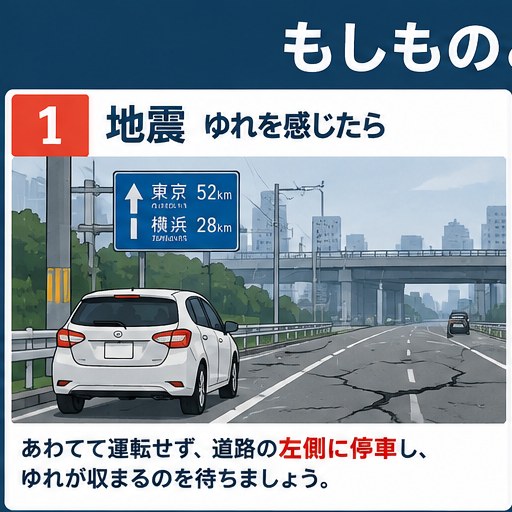
- Slow gradually and pull over to the left
- Stay in the car with the engine off until shaking stops
- Check radio or phone for information
- If you must abandon the car, leave the key in it and unlocked so it can be moved
Tsunami warnings
On the coast, move to high ground immediately. Do not go back for belongings and do not wait.
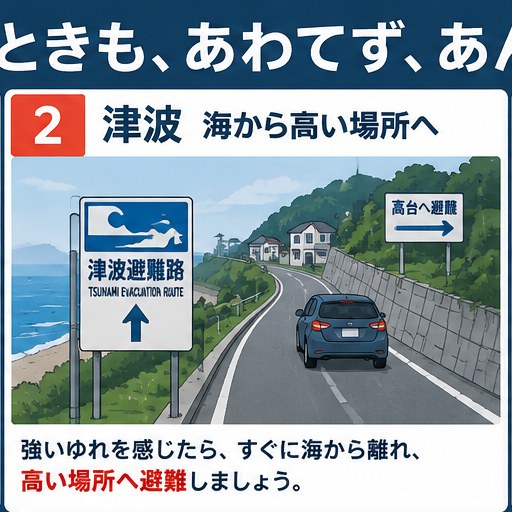
- Follow the tsunami evacuation signs to high ground
- If roads jam, evacuating on foot is faster
- Do not return to low ground until the warning is lifted
Typhoons and strong winds
Expressways close during typhoons and sea bridges shut in high winds. The best response is usually to stay put for a day.
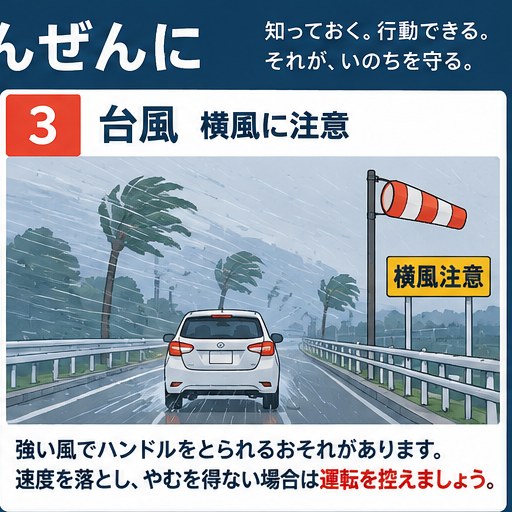
- Sea bridges, coastal and elevated roads are more exposed to crosswinds
- Do not press on through official warnings, closures or wind restrictions
Heavy rain, flooding and underpasses
Never judge water depth from the car ahead or enter water that hides the road surface. Underpasses and low ground can flood rapidly; turn around at closure barriers.
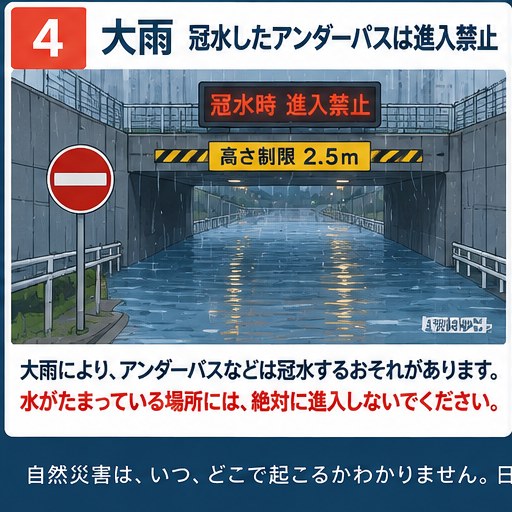
- Never drive through water deeper than half a wheel
- If water enters the car, release seat belts and escape immediately
Heavy snow and road closures
Heavy snow can cause whiteout, stranded vehicles and long closures. Navigation estimates may miss emergency restrictions; follow road authorities, police and electronic signs.
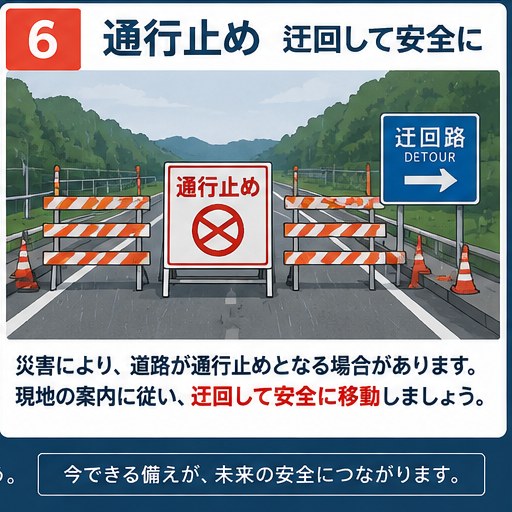
- Never bypass a barrier or enter a closed road
- Wait safely or change accommodation rather than force the itinerary
Reference sources
Useful? Share it with your Japan road trip companions.
holioo.com | Driving During Earthquakes, Tsunami and Typhoons https://e-drive.holioo.com/en/guides/japan-disaster-driving
Full background on this topic: Winter Driving in Japan、What to Do If You Have an Accident in Japan
About this page
We keep updating this collection of driving, rental, road, parking and itinerary information for Japan. When rules, facilities or spot details change, we revise the page.
Rules and fees can change. Always confirm the latest official information before you travel.