safety
What to Do If You Have an Accident in Japan
The order of actions at the scene, how to call police and the rental company, and how insurance liability works.
holioo.com Japan Drive 편집팀최종 업데이트:2026.09.01정보 확인:2026.09
First stop safely and protect the scene
In Japan even a minor scrape needs a police report; without it there is no accident certificate and insurance will not pay. Follow this order.
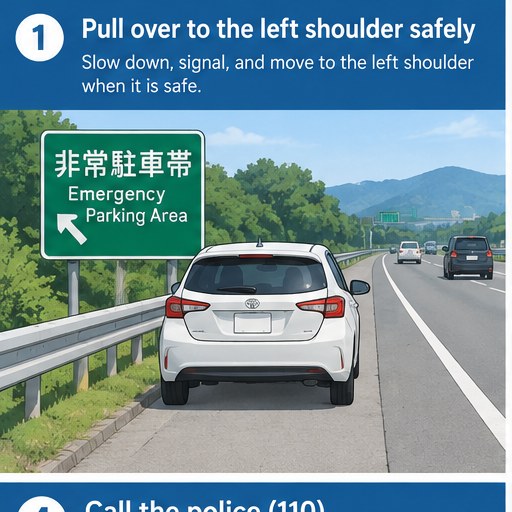
- 1. If anyone is injured, call 119 for an ambulance
- 2. Call 110 for police and stay at the scene
- 3. Call the rental company using the 24-hour number on your contract
- 4. Photograph positions, damage and plates; note the other driver's details
- 5. Never agree a private settlement at the scene
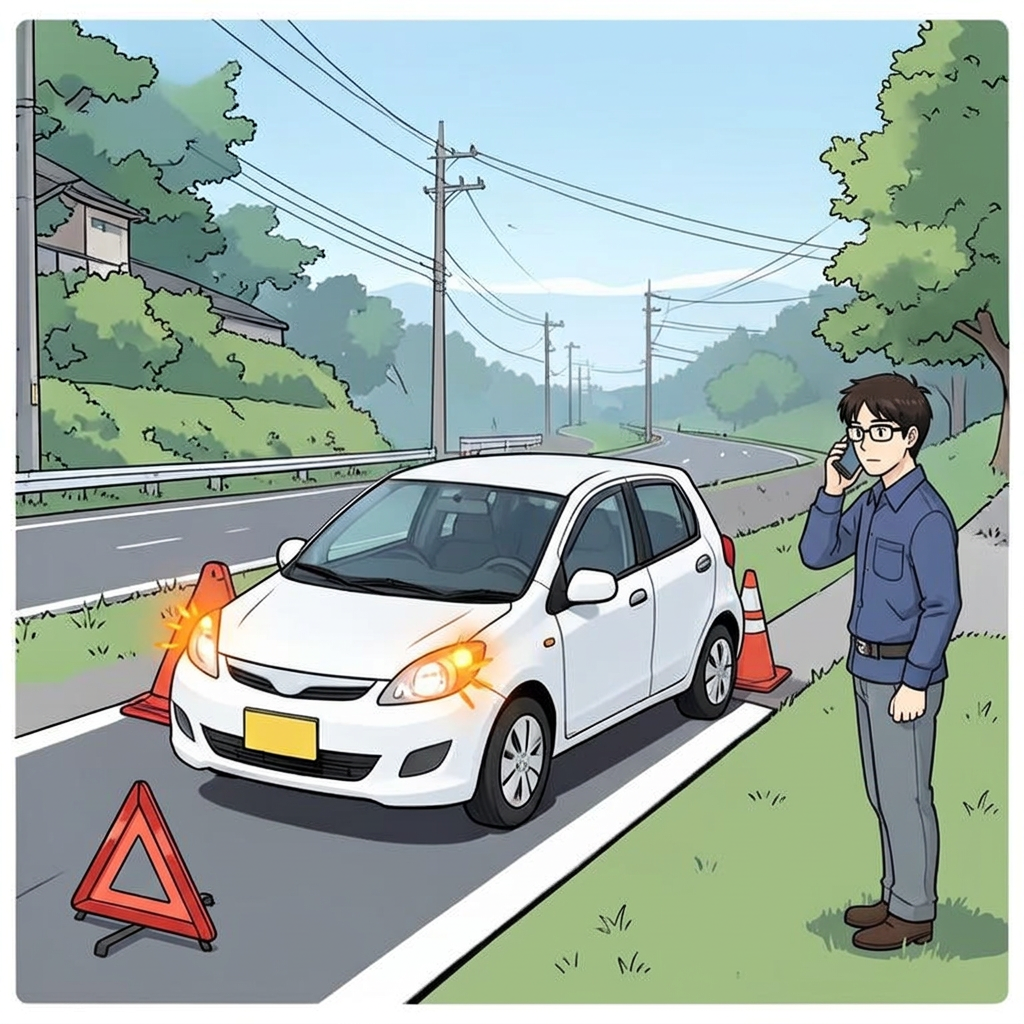
Use hazard lights and a warning triangle
Stopping on an expressway is dangerous. Secure your own safety before the car.
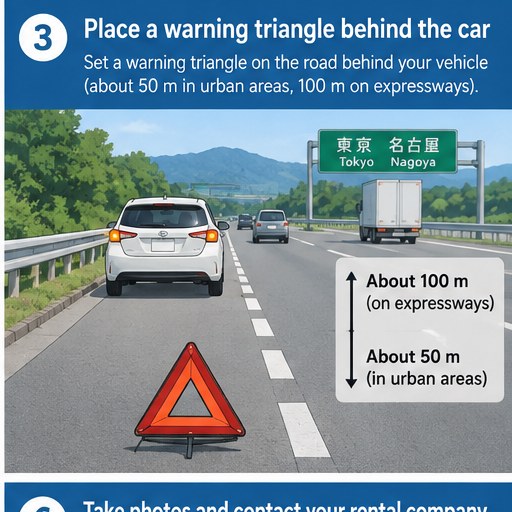
- Turn on hazard lights and move to the shoulder
- Place the warning triangle behind the car
- Get everyone behind the guardrail, not inside the car
- Use the roadside emergency phone or your mobile
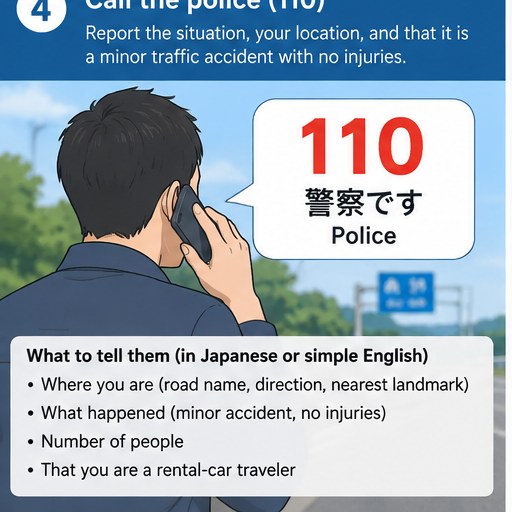
Call 119 for injuries, then police on 110
Tell the operator there has been a crash, your road or nearest landmark, the number injured and your phone number. Even a minor scrape requires a police record; do not leave before instructed.
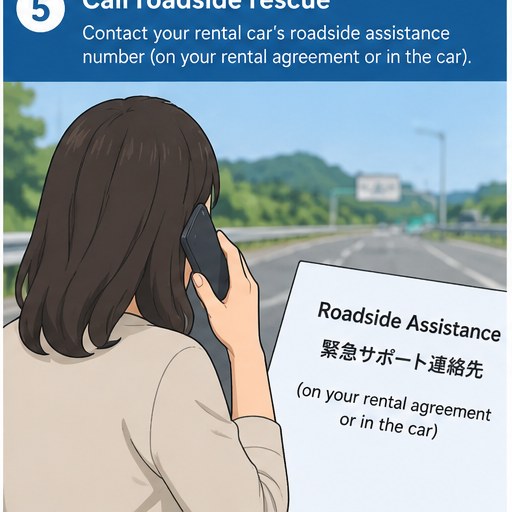
Call roadside rescue and the rental company
Use the accident number on the agreement, in-car documents or key tag. Do not arrange unapproved towing or repairs; follow the rental company's instructions.
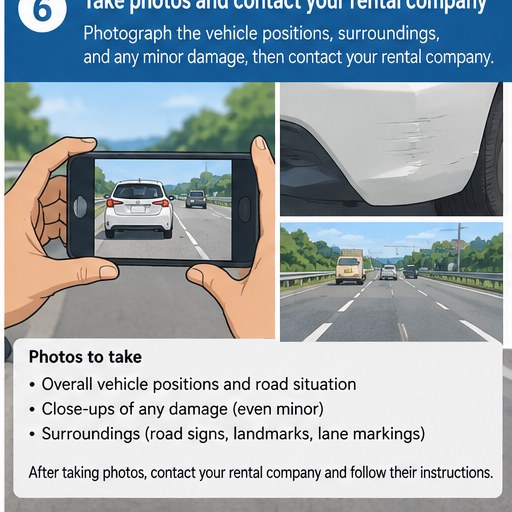
Photograph the scene and exchange details
When safe, photograph vehicle positions, the wider road, damage, signals and plates. Record the other party's name, phone and insurance details. Do not admit liability or settle privately.
Costs and excess cover
Basic rental insurance carries an excess, and Japan also applies a Non-Operation Charge (NOC) — compensation for the days the car cannot be rented while it is repaired. Most companies sell an excess-waiver option that covers both.
- NOC is typically about JPY 20,000 if you can return the car, JPY 50,000 if not
- The waiver usually costs a few hundred to about JPY 1,500 per day and is worth taking
- Insurance can be void entirely without a police report, or after drink-driving or contract breaches
자주 묻는 질문
참고 자료
도움이 되었다면 일본 드라이브를 함께할 사람에게 공유하세요.
holioo.com|What to Do If You Have an Accident in Japan https://e-drive.holioo.com/kr/guides/japan-accident-guide
같은 주제의 관련 글
이 페이지에 대하여
이 사이트는 일본 각지의 드라이브·렌터카·도로·주차·일정 정보를 계속 정리하고 있습니다. 규정이나 시설, 명소 정보가 바뀌면 내용을 수정합니다.
규정과 요금은 변경될 수 있습니다. 출발 전 공식 최신 정보를 확인하세요.